For many people, the word hotel suggests comfort or a short stay. But for thousands seeking asylum in the UK, it means something very different.
by Katherine Barnby — 21 October 2026.
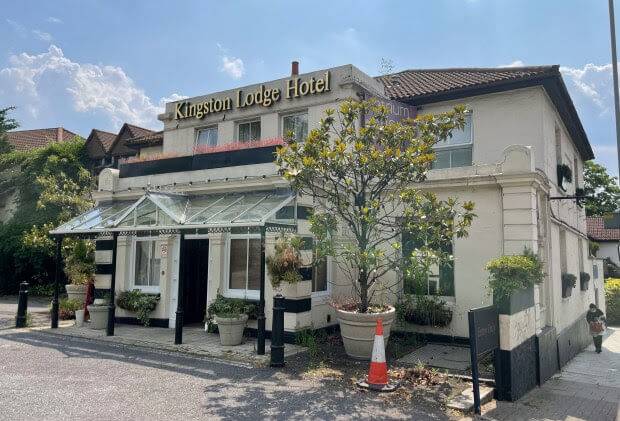
Before 2020, The Kingston Lodge Hotel wasn’t exactly high on anyone’s must-visit list. The reviews told a sorry tale: one-star ratings, peeling wallpaper, radiators patched up with duct tape. The staff were friendly, but the place itself was definitely past its prime. I drove past it often, never once noticed the place.
Then the world changed.
When the pandemic hit, life took a strange turn. For my family, oddly enough, it brought unexpected blessings. My children came home. The sun stuck around. The world slowed down, and suddenly, the skies were silent. The relentless roar of planes bound for Heathrow vanished. The South Circular—normally a chaos of engines—went quiet. The streets felt like a sleepy Sunday afternoon that had forgotten to end.
By autumn, the sunshine had faded—and so had the mood. Each day, our home was filled with heartbreaking images of people in deep distress, broadcast through the television, social media, and radio. We felt constant waves of empathy, but also helplessness, because there was nothing we could do to help.
That’s when I spotted an online call-out for volunteers from Care4Calais, a charity I’d been meaning to get involved with ever since my neighbour Simon packed his van with sleeping bags and donated garden sheds (yes, really) for people stuck in makeshift camps in northern France.
Now, because of COVID, asylum seekers were being placed in hotels across the UK while their claims were processed. It appeared to be a smart move—providing shelter for displaced people and throwing a lifeline to the hospitality industry at the same time.
I started volunteering in Colliers Wood with Seema, a woman who deserves a medal for services to refugees, and a small but mighty team of four. We handed out essentials—food, clothes, toiletries—and offered advice on everything from finding legal help to navigating the NHS. Seema soon found a warehouse and transformed it into a hub of generosity. Then she asked me to take over the distribution in Kingston, at a hotel housing 60 asylum seekers—men who had arrived with nothing but the clothes on their backs.
That’s when I met Janet Purnell, the co-founder of Asylum Stories: Room At The Inn (ASRATI). We were joined by Lizzie, a long time volunteer who regularly helped in Calais, and Fiona, who combined volunteering with a job in the charity sector.
We became part of a quiet but determined weekly rhythm. Every Tuesday, I’d load up my car with donations—groceries from the Dons Local Action Group in Wimbledon (Wimbledon FC’s charity), and surplus food collected by Des from Save the World, a grassroots initiative that swooped in on edible-but-unsellable supermarket stock. M&S pastries were a hit. Fresh fruit came from a community farm out in Surrey.
This part of volunteering was joyful. There are so many charities doing extraordinary work in my area. It reminded me that I lived in the UK among many people who truly care—that food shouldn’t be wasted when so many go hungry.
On Tuesday afternoons, we set up our pop-up distribution on trestle tables. By 5 p.m., a line of 35 to 40 men would form, each collecting a bag of essentials: snacks, tins of tuna, bread, fruit, toiletries, even SIM cards. Everyone got a phone when they arrived, along with a new hoodie, joggers, socks, underwear, and trainers. We took requests, too—laptops, hair clippers, notepads, slippers—whatever was donated, we passed along. Second-hand clothes were valuable, especially since hotel laundry only came every two weeks.
One week, after a local barber donated a cordless hair clipper a Kurdish man found his new mission: giving free haircuts for refugee charities. Another man showed up, as if he’d just stepped out of a traveling circus—ringmaster hat not included with a bare head. He asked for “irons.” Clothes iron? No. Hair straightener? Closer. Tongs? Yes. But not just any tongs—tongs for hair. The man in front of me had no hair. We stood there, locked in a polite but profoundly confusing game of charades until, at last, I understood—he needed something to curl the gravity-defying ends of his moustache. We found some eye lash curlers. I’m not sure how well they worked. The moustache disappeared. Inevitably, we left residents disappointed. After the schools were closed due to Covid, and all children were educated from home, donated laptops became as rare and revered as solid gold bricks, they were the gateway to studying and gaining qualifications.
My part was to be like Santa Claus. I delivered all the good things and received tons of gratitude. The hard work was sourcing the donations and raising funds.
At first, we worked from a street corner just outside the hotel. It was a patch of pavement in front of a parade of local shops. Occasionally, people would stop and ask why we were helping migrants instead of the homeless. The truth was, we supported both. But the question highlighted a deeper issue—a valid sense of confusion about who deserves compassion, and the risk of resentment when communities feel overlooked or left behind. Our visibility, bringing the people seeking asylum out into the open, had attracted hostility in other boroughs.
So we moved operations into the hotel car park. It offered more shelter, more privacy. And slowly, something changed. The hotel staff, initially hesitant, began to appreciate the rhythm of our presence. Then, at first as an experiment, they let us in—into the dusty dining room of a shabby, forgotten hotel. Once a place of celebration and hospitality, now a holding pen for people waiting for Home Office decisions about the outcome of the rest of their lives.
Inside, the atmosphere was stark. Meals were handed out in paper bags. The men ate alone in their rooms. There was no common space, no shared life, just silent corridors and the echoes of displacement. The once-bustling bar was silent and the industrial kitchen unused. The loneliness was palpable.
But on Tuesdays, the silence cracked open. People came. They lingered. There was smiling, the hum of multiple languages, small jokes exchanged over donuts and pastries. For many residents, I think it wasn’t the food or hygiene products that mattered most. It was us—showing up, week after week. Just being there. Being British. Being consistent. Being kind. Other charities, like Refugee Action Kingston, did amazing work.
Then, a surprise to me, something truly transformative happened.
Women arrived. Asylum-seeking women, from every generation and background. They brought children, stories, a different energy. They gathered together. The men, in their presence, shifted—becoming gentler, more communal.
Over the next three years, we met people from almost every corner of the world. We never asked them why they came. Many carried trauma too vast to name. The news from their home countries was often unbearable—conflict, loss, repression. One man said he would rather be in prison. “At least in prison,” he said, “you know how long your sentence is.” But here? Waiting stretched endlessly, a punishment without a timeline.
Mental health support was desperately needed, and often out of reach. Worse still, the very thing everyone was working toward—a positive decision—could become a cruel twist. Gaining refugee status meant being evicted from the hotel with little notice, and often left with nowhere to go. For single men especially, life outside meant life on the streets. And yet, celebrations were held. Because the uncertainty was finally over.
There were hard days. But there was something quietly radical happening in that crumbling hotel: they were reclaiming it, turning it into a place where community flickered into being amidst immense isolation.
Some occasions stand out—A theatre visit, an acting workshop pretending to be dogs, Bonfire Night at Battersea Park, the 2022 World Cup Final and a Christmas magic show. And eventually, slowly, people began to leave. Some with barely a day’s notice, sent off to unfamiliar cities—Portsmouth, Liverpool, North Shields, Glasgow—ripped from fragile roots they’d just begun to grow.
Next the Home Office decided to double up the hotel’s capacity. Beds arrived and everyone was allocated a roommate, often a stranger, who spoke a different language. The process did speed up for some people but many are still waiting for decisions. Some have been waiting for years.
At the Kingston Lodge Hotel, no one had fled from Ukraine or Hong Kong. Those escaping war and repression there arrived in the UK through “safe routes”—welcomed with legal status, placed in family homes or flats, and provided support. Some even lived with me.
But the residents of Kingston Lodge came via “unsafe routes”—perilous boat journeys, hidden flights, desperate escapes. And for that, they were housed in hotels.
Most received just £8 a week—barely enough for a bus ride to central London, let alone clothes or extra food. Many had never seen the Houses of Parliament or strolled through St James’s Park. They were here, yet silent.
We never expected to still be supporting them in 2024. But as the general election approached and hotel accommodation for asylum seekers became a political battleground, the government moved to shut down 50 hotels. Kingston Lodge was one of them.
By June 21st, everyone had to leave.
Each person was allowed just two bags and a Home Office-arranged taxi. But with over 90 people to move, even finding enough bags became a challenge. We turned to RBKares and thanks to their wonderful network—and Seema’s laundry bag donation—bags began to appear in the car park, one by one, local residents answered the call. Soon, over a hundred donated suitcases filled the hotel lobby.
Everyone moved. The doors closed. The staff left.
In truth, I wasn’t heartbroken. It had been a long haul. Tuesdays were my own again. The election happened. No parties were honest about how to achieve economic growth without relying on workers from other countries. The cacophony of opinions about the hotel accommodation policy were deafening, and yet, the people in the hotels had no voice. Every political party was talking about them. None were talking to them.
And then, the riots began.
Television screens lit up with images of mobs attempting to set hotels on fire—places that had housed those seeking refuge. It spread like wildfire across the country. But in every place where hate reared its head, volunteers showed up in even greater numbers. When I joined the national Care4Calais meeting of hotel leads—nearly 50 of us from across the UK—the message was clear: compassion hugely outweighs fear.
Asylum seekers make up a small fraction of UK immigration—just 6% in 2024 (84,231 applications, covering around 108,000 people). But they are often the most vulnerable, and their individual stories are rarely heard.
And so the idea for an oral history archive to collect and preserve their voices hatched.
Not filtered through headlines or political rhetoric, but in their own words. Stories of fear and flight, hope and humanity. Stories of people who survived the unthinkable and still dream of something better. Less than 50% are granted asylum on application because many do not fit the strict criteria, but it’s important we record everyone, even those who may not appear to deserve sympathy.
For them, hotels like Kingston Lodge weren’t homes. They were holding spaces—where many endured the loneliest and hardest chapters of their lives.
Today, Kingston Lodge is no longer an asylum hotel. Its 66 rooms are temporarily being used to shelter homeless families. Eventually, it will be demolished. But I hope it won’t be forgotten. This archive will be there for future generations, a testament to resilience, to the truth behind the headlines. To the humanity that connects us all.